
TL;DR / Key takeaways
- What does off market mean? The home is being offered without public advertising. It may sell quietly or move quickly to an online listing if the seller doesn’t accept an early offer.
- How do you find off-market properties in Melbourne? Speak directly with agents selling in your preferred suburbs. Explain your requirements, price range and timing, then stay in contact rather than relying only on property alerts.
- Why do buyer’s advocates hear about homes earlier? They regularly contact agents, who also call them because they know the advocates represent active buyers. Those conversations can uncover suitable homes before advertising begins.
- Are off-market homes cheaper? Not necessarily. Avoiding a campaign can save the seller advertising costs, but the asking price still needs checking against similar homes that have sold.
- What should you check before making an offer? Review the price evidence, arrange appropriate inspections, have the contract and Section 32 checked, and allow for buying costs and repairs. Ask when the seller will consider offers so you know how much time you have.
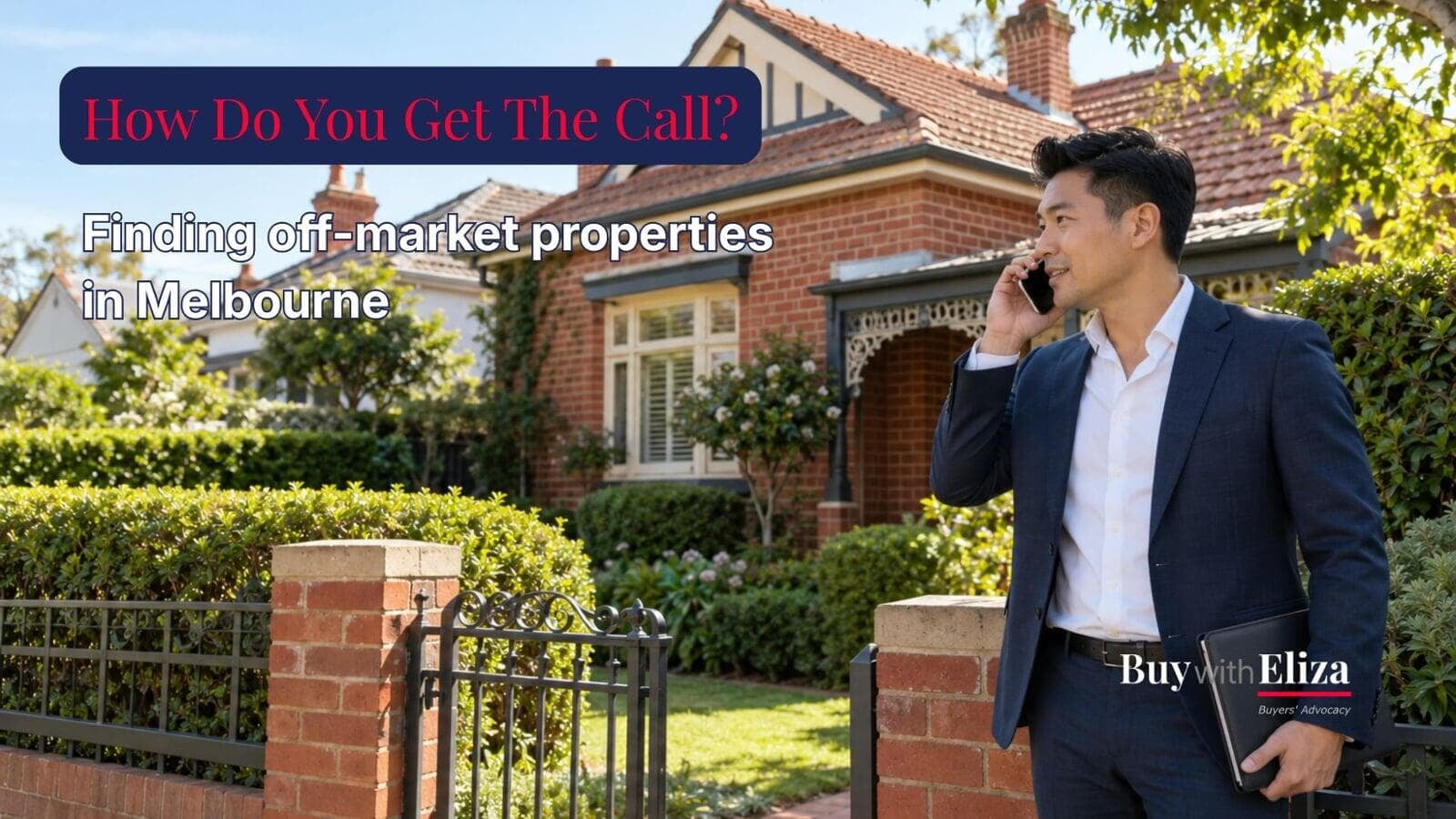
You've refreshed the property apps, saved the same handful of listings and worked out which Saturday inspections you can squeeze in. Then you hear that someone has bought a home you never even saw advertised.
How did they know it was for sale?
Off-market properties are homes offered for sale without broad public advertising, often through direct conversations with selling agents. Some sell without ever appearing online; others are offered quietly for a short time before a public campaign begins.
That is the appeal of off-market properties in Melbourne. You would like to hear about a suitable home while there is still a chance to do something about it, rather than discover it when the sold sticker goes up.
There isn't one secret list you need to get onto. There are conversations happening between selling agents, buyers and buyer's advocates before some properties reach the websites. This guide explains how to become part of those conversations and what to check when the call comes; it isn't a list of homes currently for sale. Hearing about a home first and knowing whether to buy it are two different things.
Your Quick Checklist When an Agent Calls
You don't need to decide whether to buy over the phone. Start by finding out whether the home deserves a closer look:
- Where is it, and does it fit what we're looking for?
- What price is being discussed? Or is the vendor testing the market?
- Why is it being offered before public advertising?
- Is there a planned market launch date?
- Who else is being shown through, and when will the seller consider offers?
- Can we get the Property Price Statement, contract and Section 32?
- Can we inspect and complete the checks we need within that timetable?
Those answers give you something useful to work with. "It's off market" on its own tells you very little about whether it is right for you.
Why Would a Seller Sell Before having a public campaign?
A full property sales campaign takes preparation and money. Photography, advertising and a series of inspections may all be ahead of the seller. If an agent already knows people looking for that kind of home, there is a straightforward reason to pick up the phone first: a suitable buyer might be found without going through the whole campaign.
That can work well for both sides. The seller gets a sale they are happy with, and the buyer gets to consider a home they might otherwise have had to compete for publicly. Other sellers prefer a quieter approach because they want privacy or fewer people coming through the house.
But the property may not stay off market for long. The agent could be arranging early inspections while getting ready to launch online. If nobody makes an acceptable offer, the campaign goes ahead. Other homes sell quietly and never reach a public campaign stage.
This is why asking about timing is so useful. "Are you planning to list it next week?" gives you a much clearer picture than "Is it off market?" You need to know whether you are considering a deliberately quiet sale or an early look at a home that will soon be advertised.
You may hear the second situation described as pre-market. The terms overlap: the home isn't publicly advertised yet, but a launch is planned if it doesn't sell first. Private sale means something different. It describes buying through negotiation rather than auction, and the home can be advertised or unadvertised.
How to Find Off-Market Properties in Melbourne
An agent can't recognise a good match if all they know is that you want "something in the eastern suburbs". Give them a clearer picture of your search: where you want to live, what you can spend, what the home needs to have and when you hope to buy.
For example, suppose you're looking for a three-bedroom home in Blackburn. A backyard and access to the station matter, but you would happily live with an older kitchen. Saying that is more useful than asking to be sent every off-market property. It helps the agent understand a home you might consider that another buyer would dismiss.
Speak with agents who actually sell the sort of property you want in the areas you're targeting. Introduce yourself at relevant inspections, follow up and give them useful feedback. If a house didn't work because the bedrooms were too small or the road was too busy, explain that. They learn more from the reason than from a polite "not for us".
You can share a workable price range without announcing the absolute maximum you could stretch to. The aim is to help an agent identify suitable homes, not start negotiating against yourself before you have seen one.
Then keep the conversation going. Agents meet plenty of people at inspections; an introduction several weeks ago is not the same as knowing you're still actively looking. Continue checking public listings as well. A suitable home is worth considering whether you hear about it over the phone or find it on your lunch break.
Why Do Agents Call Buyer's Advocates?
This is the part that can sound mysterious in property marketing, but the practical explanation is quite ordinary. Agents have our number, they know we have clients looking to buy, and we speak with them regularly.
At Buy with Eliza, we call agents every week in the areas where we're searching for clients. We ask what's happening, what might be coming up and whether there is anything that fits the people we're helping. As those conversations continue, agents get to know what our buyers need, including the compromises they will and won't consider.
When an agent has a property that might suit, they have a reason to call us. There may be a buyer ready to look at it before a public listing, giving the seller a chance to agree a sale without launching a full campaign. We are making calls, and calls are coming back.
That is a genuine professional advantage. A buyer fitting a search around work and family may be starting those relationships from scratch. We are already having the conversations as part of our working week. When a property is only being offered quietly for a short time, being someone the agent thinks to call can make a difference.
You can do that work yourself. It takes time to establish the contacts, explain your requirements and keep following up across the area you're searching. If you would rather have someone doing that alongside the property assessment and negotiation, that's part of Buy With Eliza's buyer advocacy services.
The call is valuable because it gives you a home to consider. What happens next is where the buying decision gets made.
You've Heard About a property Early. Is It Actually a Good Buy?
Imagine you walk through a home that seems to have everything you've been waiting for. The agent says the seller would consider an offer before advertising. You can already see the appeal: no more weekends searching, no public campaign to follow and perhaps no auction to get through.
It is easy to start thinking about how to secure it before working out what you should pay.
Start with similar homes that have sold. Look beyond the number of bedrooms and the distance from the property. Compare condition, land, parking, layout and the street itself. These are the details that help explain why two nearby houses can attract quite different prices.
Take a hypothetical Balwyn example. The agent points to a renovated three-bedroom home nearby to support the price of an older three-bedroom house you're considering. That sounds reasonable until you look more closely: the sold home also had a newer roof, better parking and a quieter position. You now have questions to investigate, including what work your potential purchase needs and what it might cost. The shared bedroom count and comparable floor space doesn't answer them.
Selling without a campaign may save the seller advertising expenses. It doesn't tell you what price they will accept, or whether that price is good value for you. Equally, a home doesn't have to be discounted to be worth buying. If it fits your needs and the price makes sense, an early introduction can be useful on those terms.
Don't Spend the Repair Budget on the Purchase Price
Think about what happens after you get the keys. If the roof needs attention, the heating is unreliable or the bathroom needs work, those costs will be yours. Allow for applicable stamp duty, legal fees, inspections, moving and a buffer before deciding how much you can offer.
The problem with stretching is that the expenses don't stop because you reached your limit on the purchase. Our guide to borrowing power versus a comfortable buying budget looks at that distinction in more detail.
What If You Need to Decide Quickly?
A short timetable is easier to handle when you know what still needs doing. Ask for the paperwork early, book the appropriate inspections and find out when the seller intends to consider offers. That lets you work out whether you can be ready, rather than simply feeling rushed.
For an agent-managed residential sale in Victoria, request the current Property Price Statement, along with the contract of sale and Section 32 vendor statement. The Property Price Statement replaced the former Statement of Information under changes introduced in October 2026. Agents must still prepare it for unadvertised residential sales and provide it at inspections or on request. The sold-price publication requirements also mean a quiet marketing approach does not guarantee the eventual price stays private. Consumer Affairs Victoria explains the off-market requirements.
Have your conveyancer or solicitor review the legal documents before signing, and arrange the building, pest or other checks appropriate to the home. With an apartment or townhouse, owners corporation records and planned works may deserve particular attention. With a house, questions about easements, alterations, drainage or nearby development may need investigating. Our Victorian property due-diligence guide can help you identify where to start.
Make time to think about living there, too. A quiet mid-morning inspection won't necessarily tell you what the school run, evening traffic or parking will be like. Those details can matter long after you've forgotten how the agent described the sale.
If you can't complete an important check in time, say what is outstanding and ask whether there is room to do it. Get advice about any contract conditions you need, including finance. You may be able to proceed with appropriate protection, or the timing may not work. Knowing which situation you're in is more useful than signing and hoping the missing information turns out well.
What Should You Offer Before It Goes Public?
You may be tempted to offer more simply to keep the home away from a public campaign. Before doing that, ask yourself what the extra money is buying. Is the price supported by the property and recent sales, or are you paying to end the search?
Decide what you're comfortable offering, where you'll stop and what terms you need. Ask about the seller's preferred settlement date; something that works for both households may help the conversation without increasing the price. Check the cost to you, though. A settlement that leaves you paying extra rent or arranging temporary accommodation is not a free concession.
If another buyer is mentioned, ask what stage they have reached and how the seller will handle offers. An inspection is different from a submitted offer, but you may still have to decide without knowing exactly what anyone else will pay. Have your proposed offer reviewed and don't assume the agent will come back for another round. Our guide to private sale negotiation in Melbourne covers that conversation in more detail.
Sometimes you will make an offer and buy the home. Sometimes the seller will want more than you can justify and take it to market. Neither outcome means you misunderstood the opportunity. You heard about a property early and made a decision about it. That is the point of getting the call in the first place.
Before you make your next move
If you're wondering why you keep hearing about homes after they've sold, Eliza can talk with you about your search, the areas you're considering and where you might need help.
Or perhaps you've already had the call and now have a property to decide on. Our Negotiation & Auction Support service is for Melbourne buyers who have found a home and want independent help before committing.
Buy with Eliza works only for buyers. We can help you look beyond the appeal of getting in early and work through the questions that will matter after settlement: does this home suit you, what should you pay, and what needs checking before you agree?
Tell Eliza what you are considering and what concerns you. There is no obligation to proceed.